




During the Second World War, a temporary German Prisoner of War (POW) camp was established near the south junction of Forest Road and Hog Hill, adjacent to what is now Hainault Forest Country Park between Chigwell Row and RAF Fairlop.
The camp was classified as a working or labour camp.
The German prisoners held there were predominantly low-risk individuals who were employed in local agricultural work, helping to maintain fields and work at nearby farms.
Local historical records suggest that Hainault Lodge, originally known as Hog Hill House and situated prominently on the hilltop, played a direct role in the camp's operations.
Oral histories indicate that German prisoners may have worked there, including serving as waiters in the Officers' Mess, although there is no firm evidence to confirm this.

My friend, Flying Officer Kenneth Albert John Trott, was stationed at Fairlop with 195 Squadron, flying Typhoons from September 1943.
He later transferred to 197 Squadron in the period leading up to D-Day on June 6, 1944, before being posted to Needs Oar Point.
He made no mention of a temporary prisoner of war camp.
It is possible he was unaware of its existence, or that the camp had been disbanded by the time he was there.
Nor did he ever mention the Italian prisoner of war camp on the north side of New North Road, opposite Penrith Road.
What surprises me is that low-risk prisoners at that camp were reportedly allowed to walk about during daylight hours, provided they wore a yellow triangle sewn onto their jacket sleeves.
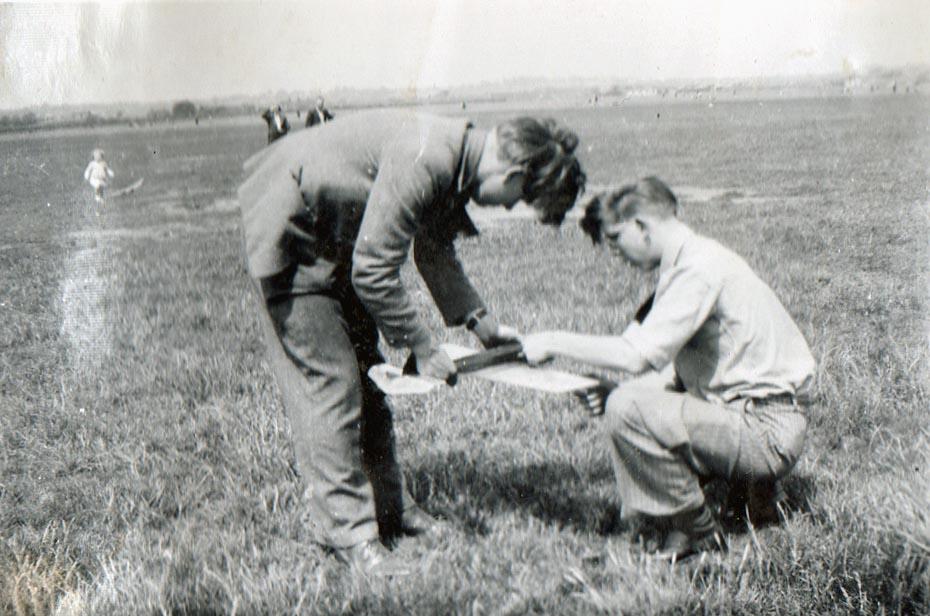
When I was about 10 years old, probably in 1953, I visited Fairlop to watch model aircraft being flown and motorbike racing on a distant runway.
While there, I met a foreign gentleman, or so I thought at the time, accompanied by an Alsatian dog that responded to commands in both English and German.
Like many temporary camps across the UK, the tents and basic structures at Hog Hill were dismantled after the repatriation of prisoners, a process completed between 1945 and 1948.
Hainault Lodge has since been demolished.
Today, there are no remains of the POW camp structures left on the hill.
The area where it once stood has been returned to community use as a nature reserve.
- David Martin is co-founder of the Fairlop Heritage Group (fairlopplaintimes.com).


Share