




The "world's most important clock" once made Del Boy rich – but its real-life inventor helped save countless lives at sea.
The man behind that timepiece was John Harrison, a self-taught clockmaker whose marine chronometer revolutionised navigation.
Harrison died 250 years ago in 1776 on his 83rd birthday and is buried in Hampstead parish churchyard.

But he is remembered as the man who solved the centuries-old problem of calculating longitude at sea which enabled sailors to determine how far east or west they were.
His invention - which looks like a large pocket watch - secured him the prize in a fiercely fought competition and made ocean voyages safer and more accurate.
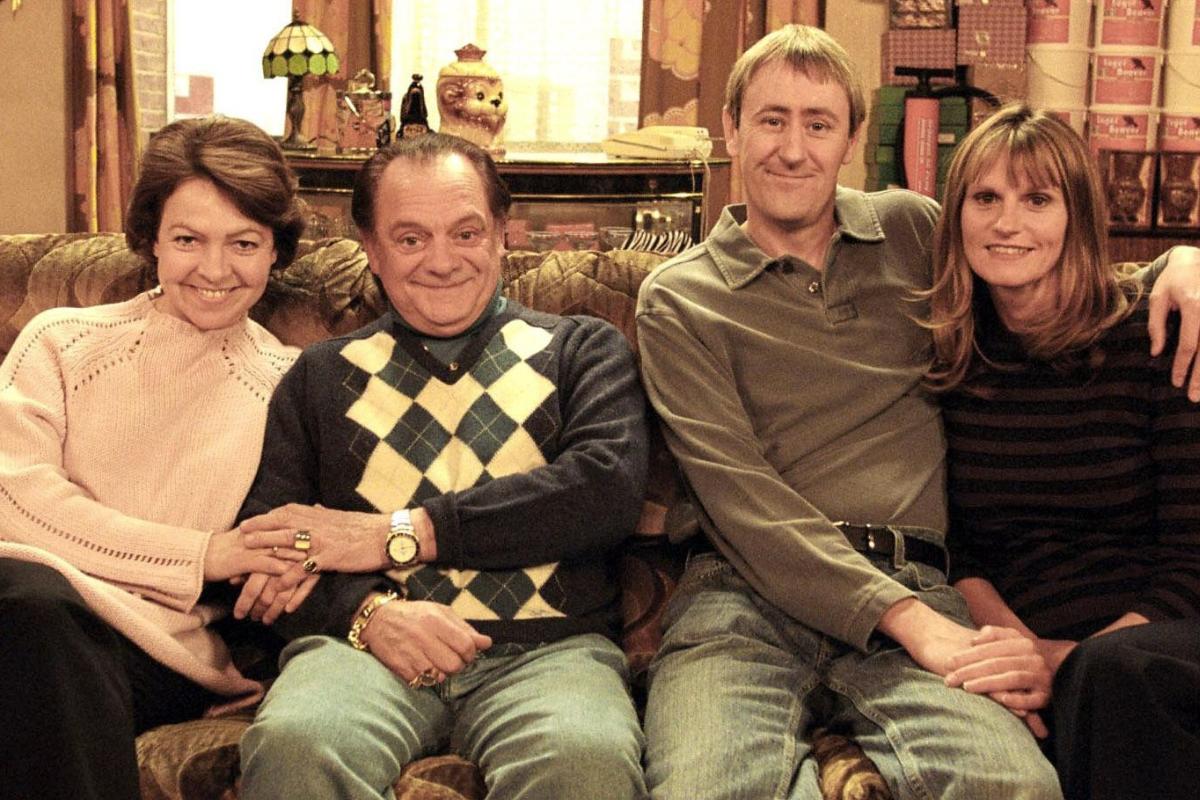
Harrison’s legacy was famously brought to life in the 1996 Only Fools and Horses episode Time on Our Hands, when Del Boy and Rodney Trotter discover a Harrison timepiece in their lock-up and sell it at auction to become millionaires.

But beyond TV fame, Harrison’s chronometer fixed a problem that had caused countless vessels and thousands of lives to be lost in the waves.
The challenge of determining longitude at sea became a national obsession in the 18th century.
The urgency of the problem was tragically underscored by the disaster of October 1707, when four victorious Royal Navy ships – HMS Association, HMS Romney, HMS Eagle and HMS Firebrand – were wrecked on rocks off the Isles of Scilly because they couldn't pinpoint their location.

At least 1,400 men died and among the dead was national hero Admiral Sir Cloudesley Shovell.
The disaster prompted Parliament to offer a £20,000 prize – around £3.5 million today – to anyone who could devise a "naval chronometer" - an reliable and accurate timepiece for use at sea.
Navigators on ships needed to know the precise time at a fixed reference point in order to calculate their exact position at sea. Even a small error could spell disaster.
Harrison - who was born in Yorkshire the son of a carpenter - realised the key was a clock accurate enough to keep the time of a reference location, such as Greenwich, while withstanding the changes in humidity, pressure and temperature on a sea voyage.
He worked for decades on a problem that defeated many of the era’s brightest minds, refining his designs through painstaking trial and error.
He completed his first marine timekeeper, the H1 in 1735 and by 1759, he had developed the H4, a watch that met the requirements of the Longitude Act staying accurate despite conditions on board.
Harrison however was a difficult and grumpy character and put the committee's collective nose out of joint.
They only awarded him half of the prize until his son William appealed to the King himself and he was granted the remainder.
Harrison’s legacy extends beyond the marine chronometer.
He also invented the bimetallic strip to compensate for temperature changes on board - a technology now found in thermostats, fire safety devices and even kettles.
And the caged roller bearing to combat the pitch and roll of a shop is a key component in modern machinery.
Some historians consider the H4 to be the world’s most important timepiece. It is now displayed at the Royal Observatory in Greenwich, near the Prime Meridian – a line that would not exist without Harrison’s contribution to navigation.
His remarkable life is marked with a grave in St John's Churchyard and a plaque in Westminster Abbey and on his former home in Red Lion Square Holborn.


Share